Industry News
Visual validation: the ideal process for creatives.

Today, creative teams produce a volume of visuals higher than ever, whether for social media posts, newsletters or blog articles. Yet in many organisations, the validation process remains unclear, scattered across emails, shared files and contradictory feedback. Structuring validations is therefore essential to save time, improve content quality and streamline exchanges.
What is the visual validation process?
Definition and key stages of the validation process
The validation process for visuals refers to all the steps involved in checking, commenting, correcting and approving creative content before its distribution. It applies to visuals as well as videos, advertising content or communication media.
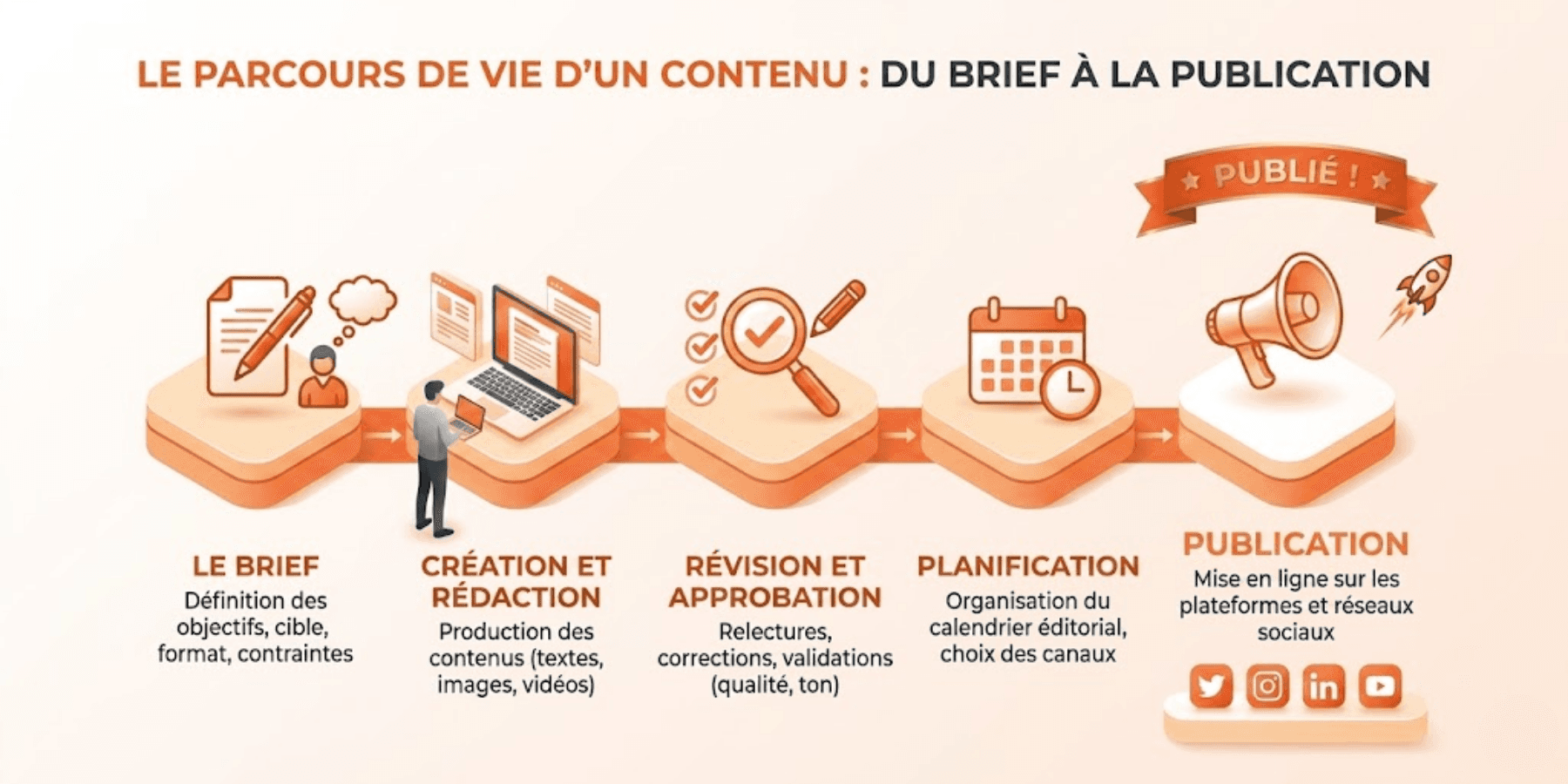
This workflow generally starts as soon as the brief is received. Creative teams then produce a first version of the content, which goes through several review, annotation and correction stages before final validation.
Each stage follows a precise circuit:
creation of the brief;
content production;
internal review;
annotations and feedback;
corrections;
final validation;
publication or distribution.
A clear process makes it easier to organise the work and avoid unnecessary back-and-forth.
The parties involved: from the creative to the final decision-maker
The validation process mobilises several profiles within marketing and communication teams. Graphic designers, videographers, motion designers or art directors produce the content. Project managers then coordinate the exchanges and ensure deadlines are met.
Marketing, communication or executive managers then validate the elements according to their strategic objectives, brand image or regulatory constraints.
When the process is not structured, each person involved uses their own tools and methods. Feedback then arrives via multiple channels: emails, instant messaging, calls or meetings. This dispersion significantly slows down validations.
Why structuring your validation workflow is crucial
The major risks of an undefined process
A poorly structured validation process quickly leads to operational problems. Teams waste time searching for the right versions or checking which feedback has already been taken into account.
In some cases, several versions of the same visual circulate simultaneously. Validations then become confusing and mistakes more frequent.
The risks also concern the brand image. A poor validation can lead to the publication of content that is non-compliant, incomplete or inconsistent with the graphic charter.
On a large scale, this disorganisation directly impacts the overall performance of creative teams.
Productivity and profitability
Structuring validations improves the productivity of marketing and communication teams. When roles are clearly defined and stages are framed, exchanges become more fluid.
Teams spend less time on administrative tasks or follow-ups. They can focus more on the creation and quality of content.
A clear workflow also improves the profitability of projects. Deadlines are better controlled, corrections are reduced and validations progress faster.
In large organisations, this optimisation represents a considerable time saving across all campaigns.
Common challenges in creative workflows
The nightmare of scattered feedback
One of the main problems for creative teams remains the dispersion of feedback. Comments often arrive through several different tools: emails, annotated PDFs, screenshots, meetings or Slack messages.
This multiplication of channels creates confusion. Teams no longer know which comments are high priority or which version needs to be corrected.
Validations then become long and frustrating. Creative professionals spend more time consolidating feedback than actually producing content.
Without centralisation, the risks of error increase significantly.
Why manual checklists hinder your growth
Many teams still use manual checklists or Excel spreadsheets to track validations. This method can work on a few simple projects, but it quickly reaches its limits.
As volumes increase, tracking becomes difficult to keep up to date. Teams lose visibility on the progress of validations and priorities.
Manual processes also slow down decision-making. Each validation requires additional verification and repeated exchanges.
In the long term, this way of working holds back the growth of creative teams and complicates the management of multi-content campaigns.
How to digitalise and automate your validations?
Moving from paper-based validation to Online Proofing
Online proofing transforms the way teams validate their content. Instead of exchanging files by email, feedback is centralised directly onto the visuals or videos.
Users can annotate a specific area, leave a comment or validate a stage in just a few clicks.
This approach significantly improves the fluidity of exchanges. Every piece of feedback is tracked and associated with a specific version of the content.
Online proofing also allows certain steps to be automated: notifications, reminders, status changes or validation circuits.
Teams then gain speed, visibility and efficiency.

The 6-step checklist for flawless validation
Preparation phase: from submission to internal review (3 steps)
1. Formalise the brief (make it H4, I cannot in Semrush)
Every effective validation process begins with a structured brief. The objectives, formats, deadlines, target audiences and constraints must be clearly defined.
This step aligns the teams from the start and limits misunderstandings.
2. Centralise content (make it H4, I cannot in Semrush)
Content must be grouped together in a single space to avoid version proliferation.
This centralisation makes tracking easier and improves collaboration between teams.
3. Organise the internal review (make it H4, I cannot in Semrush)
Before any external validation, an initial internal review allows you to check content consistency.
Creative teams and project managers can thus correct the first blocking points before distribution.
Finalisation phase: annotations, corrections (3 steps)
4. Centralise annotations (make it H4, I cannot in Semrush)
All comments must be grouped in the same tool to ensure a clear view of the requested changes.
Contextualised annotations save a considerable amount of time.
5. Validate corrections (make it H4, I cannot in Semrush)
Once changes are done, corrected versions must be submitted quickly to the validators.
Each step must be tracked to avoid version errors.
6. Finalise and publish (make it H4, I cannot in Semrush)
After final validation, the content can be published or distributed.
The process remains accessible to maintain a clear history of validations and exchanges.
Optimise your reviews with validation software
Centralise feedback with a tool like Smartevo
Marketing and communication teams need tools capable of centralising content, feedback and validations in a single environment.
Smartevo allows you to structure the entire creative process, from the brief up to publication. Annotations are made directly on the content, versions are archived and workflows are customisable according to the teams' needs.
Thanks to this centralisation, exchanges become smoother and validations quicker. Teams gain visibility on projects, reduce back-and-forth and improve the quality of the content produced.
Structuring the visual validation process does not only save time. It also improves content quality, facilitates collaboration and gives better visibility across all creative projects. By centralising feedback and automating certain steps, tools like Smartevo help marketing and communication teams produce more efficiently, with greater consistency and peace of mind.
