Industry News
Produce more efficiently with creative automation

Marketing teams today have to produce ever more content, across ever more channels. They have to manage increasingly complex marketing campaigns, involving several types of content, multiple approvals and many necessary resources.
From social media, videos, email campaigns, blog posts and sales materials, the proliferation of formats makes marketing production increasingly complex. Creative automation makes it possible to automate certain tasks to save time, limit hidden costs and improve the quality of creative workflows.
Why is marketing production becoming more complex?
The multiplication of formats increases the workload
Marketing teams now have to manage many types of content in parallel. A single campaign may require visuals, videos, banners, LinkedIn posts, newsletters or even blog posts.
This multiplication of formats makes team organisation more difficult and greatly increases the need for coordination. Each communication piece may require several creative feedback rounds, interim approvals and adjustments depending on the distribution channel. Back-and-forth increases, approvals take longer and the risk of error rises.
Creative workflows are becoming harder to manage
Creative workflows become more complex as teams have to manage more formats, approvals and stakeholders.
To structure these stages more effectively, some companies set up a flow diagram, a process map or a process mapping in order to visualise project progress more clearly. This approach helps to better understand operational processes and each team’s responsibilities.
The more content there is, the more complex creative workflows become.
Teams have to track requests, allocate tasks, coordinate approvals, manage versions and meet deadlines. They also have to take account of design feedback, input from different stakeholders and the constraints linked to each type of content. Without clear organisation, projects fall behind and exchanges become hard to follow.
In many companies, information remains scattered across several tools, several files and several communication channels. This lack of process mapping within the company makes task tracking more difficult and slows down approvals. It also makes decision-making and project implementation more difficult.
Hidden costs slow teams down
Unnecessary meetings, vague briefs, overly long approvals or duplicated work represent significant hidden costs. These problems affect marketing teams as well as human resources or other functions involved in projects.
These problems slow marketing teams down and reduce their ability to produce quickly. They also create a loss of visibility over the true status of projects and make decision-making more difficult.

What is creative automation?
Definition of creative automation
Creative automation is often part of a broader approach to business process automation.
Companies seek to automate repetitive processes in order to gain efficiency, streamline exchanges and reduce wasted time.
Creative automation involves automating certain repetitive tasks linked to marketing production. It fits into a broader logic of business process automation and continuous improvement.
It can cover visual creation, format adaptation, variant generation, publication scheduling or even the organisation of creative workflows. This business process automation helps teams structure their production more effectively. It also makes it easier to set up a smoother and simpler approval workflow to follow.
The aim is not to replace teams, but to allow them to focus on higher-value tasks.
Why are marketing teams increasingly interested in it?
Marketing teams have to produce faster while maintaining a high level of quality. They also have to manage ever more creative content, often produced within very short deadlines.
Creative automation makes it possible to save time on repetitive tasks, reduce errors and streamline collaboration between internal teams.
It also helps to better manage updates, format adaptations and last-minute requests.
Automating tasks without compromising quality
Automating tasks does not mean producing more standardised content.
On the contrary, companies can use intelligent automation to maintain brand consistency, respect their visual identity guidelines and adapt content to each channel.
This approach makes it possible to produce more quickly while maintaining a high level of execution quality. It is particularly useful for video approval, video review or managing creative feedback on major campaigns.
What benefits are there for marketing teams?
Save time on repetitive tasks
Creative automation makes it possible to automate the most time-consuming tasks.
Teams can, for example, generate several versions of the same visual, automatically adapt one format to several channels or update multiple pieces of content at the same time. They can also turn a blog post into a video, a white paper or a search engine post.
This time saving allows marketing teams to focus more on marketing strategy and content creation.
Reduce hidden costs
Companies without a clear process map often struggle to track approvals, allocate responsibilities and manage projects.
Mapping processes then becomes essential to identify bottlenecks and streamline exchanges.
Manual workflows often generate a lot of hidden costs.
Teams spend time searching for files, chasing approvals or redoing the same work several times.
Better automation reduces these time losses and improves the overall flow of projects. It also makes it easier to set up a clearer and faster document approval process.
Improve performance tracking
Creative automation also makes it easier to improve performance tracking.
Teams can more easily track project progress, deadlines, the number of approvals and workload. They also have better real-time visibility over workflows and content awaiting approval.
These insights then make decision-making easier and help optimise future campaigns.
Why is AI automation taking up more and more space?
Intelligent automation helps produce faster
AI automation makes it possible to go even further in marketing production.
Teams can automatically generate content ideas, briefs, captions for social media or visual concepts.
This intelligent automation helps speed up certain stages without replacing human thinking. It also helps improve campaign conversion rates thanks to content that is better tailored to audience expectations.
Content can be adapted more quickly
AI automation also makes it easier to adapt content to multiple formats.
The same message can be adapted more quickly for a newsletter, a LinkedIn post, a video or a banner.
This flexibility is particularly useful in a context where campaigns increasingly require more variants.
Teams remain in control
Even with a high level of automation, teams remain in control of the content produced. The workflows put in place must remain flexible enough to take account of last-minute adjustments and updated content.
Approvals, adjustments and trade-offs remain essential to guarantee message consistency and content quality.
AI therefore becomes a production support tool, but does not replace the role of marketing teams.
Why does Smartevo help structure creative automation?
Centralise projects and content
Smartevo helps teams set up genuine process mapping in order to better visualise stages, approvals and responsibilities.
The platform makes it possible to build a clearer process map and better track project progress. Teams can thus better understand business processes and the different approval stages.
Smartevo enables marketing teams to centralise their briefs, content, approvals and exchanges in a single space.
This centralisation makes it easier to manage creative workflows and reduces information loss between the different stages of the project.
Teams therefore have better visibility over tasks in progress and priorities.
Simplify approvals and updates
Smartevo helps teams structure their document approval process and automate certain approval stages.
Feedback is centralised directly on the content to avoid information loss and duplication. This simplifies the handling of design feedback, creative feedback and approvals on each creative piece.
Smartevo helps teams better track approvals, comments and the different versions of a piece of content.
Feedback is centralised directly on visuals, PDFs or videos, which helps reduce back-and-forth and save time.
This organisation also simplifies future content updates.
Better manage marketing production
Smartevo also helps companies automate processes and improve their organisation.
The platform makes it easier to track tasks, approvals and deadlines thanks to a clearer business process mapping. This organisation helps teams work more efficiently in the long term.
Smartevo also helps teams better manage their marketing production with management tools, schedules and more precise project tracking.
The platform makes it possible to distribute workloads, track deadlines and better anticipate resource needs.
This organisation helps teams produce more efficiently while reducing hidden costs. It fits into a broader logic of process automation and business process automation.
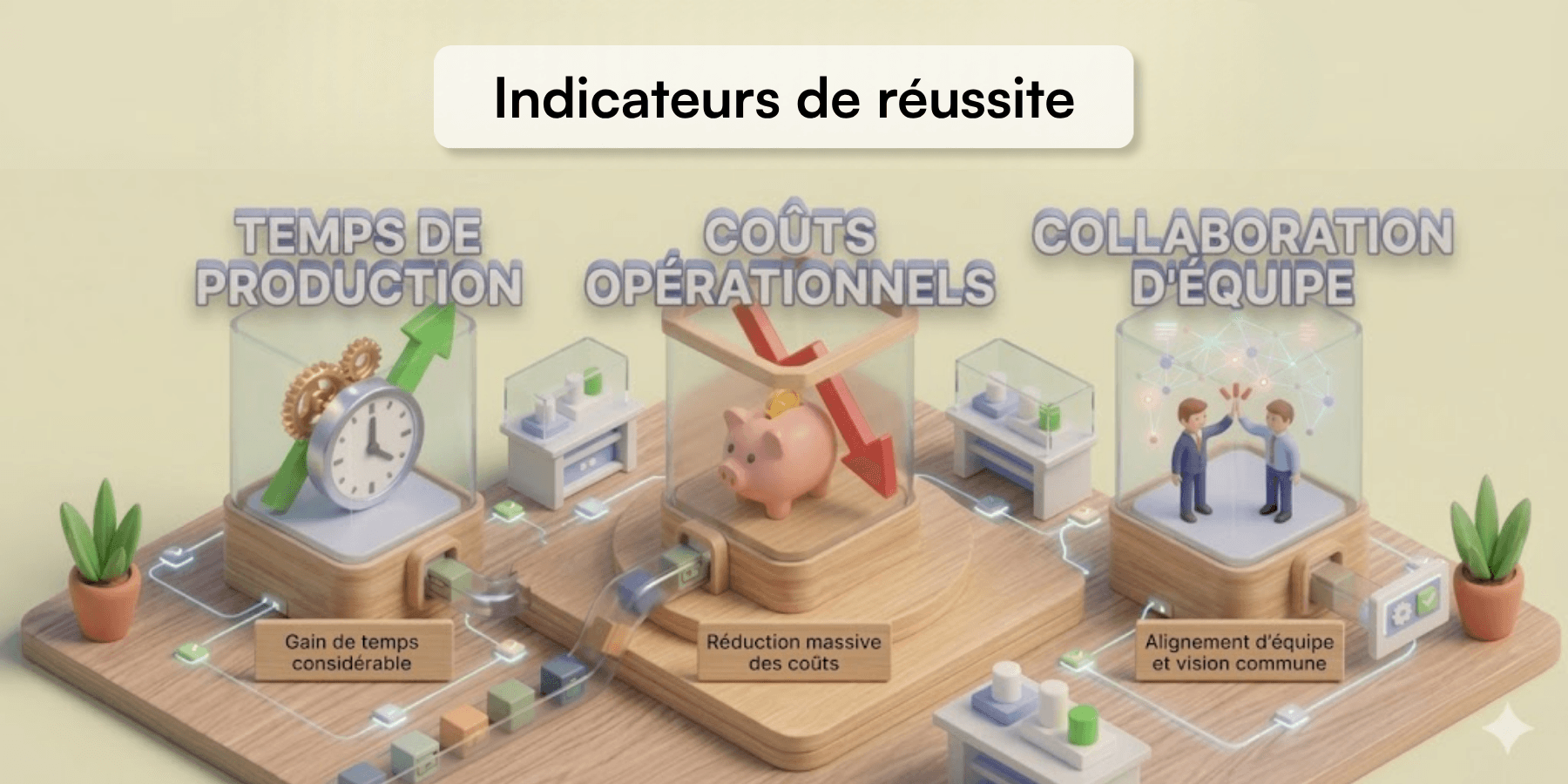
Creative automation is becoming essential for marketing teams that have to produce faster, across more channels and with fewer resources. By automating certain tasks, companies save time, reduce hidden costs and improve the fluidity of their creative workflows. With a solution like Smartevo, they can structure this automation while keeping control over their content and approvals.
