Industry News
Content production: what is blocking before starting

A content production project rarely starts when you think it does. Even before a writer writes their first line or a designer opens their software, invisible bottlenecks have already set in. Incomplete briefs, unavailable stakeholders, vague responsibilities: it is these upstream obstacles that explain why so many projects are delayed right from the start.
Organisational bottlenecks
An absent or incomplete brief
The brief is the starting point of any content production. Yet, it is often written in a haste, incomplete or simply missing. As a result, each contributor interprets the request in their own way and production starts in different directions.
This lack of upstream scoping generates back-and-forth from the very first stages. The team then spends more time clarifying the request than producing, and the project falls behind before it has even properly started.
Unavailable stakeholders right from the start
A well-scoped project can still be blocked if the right people are not available at the right time. A decision-maker unreachable to sign off on the angle, an external provider waiting for feedback for three days: these situations are more common than you might think.
The availability of key stakeholders is an often-overlooked prerequisite when launching a project. Failing to anticipate it means exposing yourself to bottlenecks from the very first hours of production.
Tool-related bottlenecks
Information scattered across multiple tools
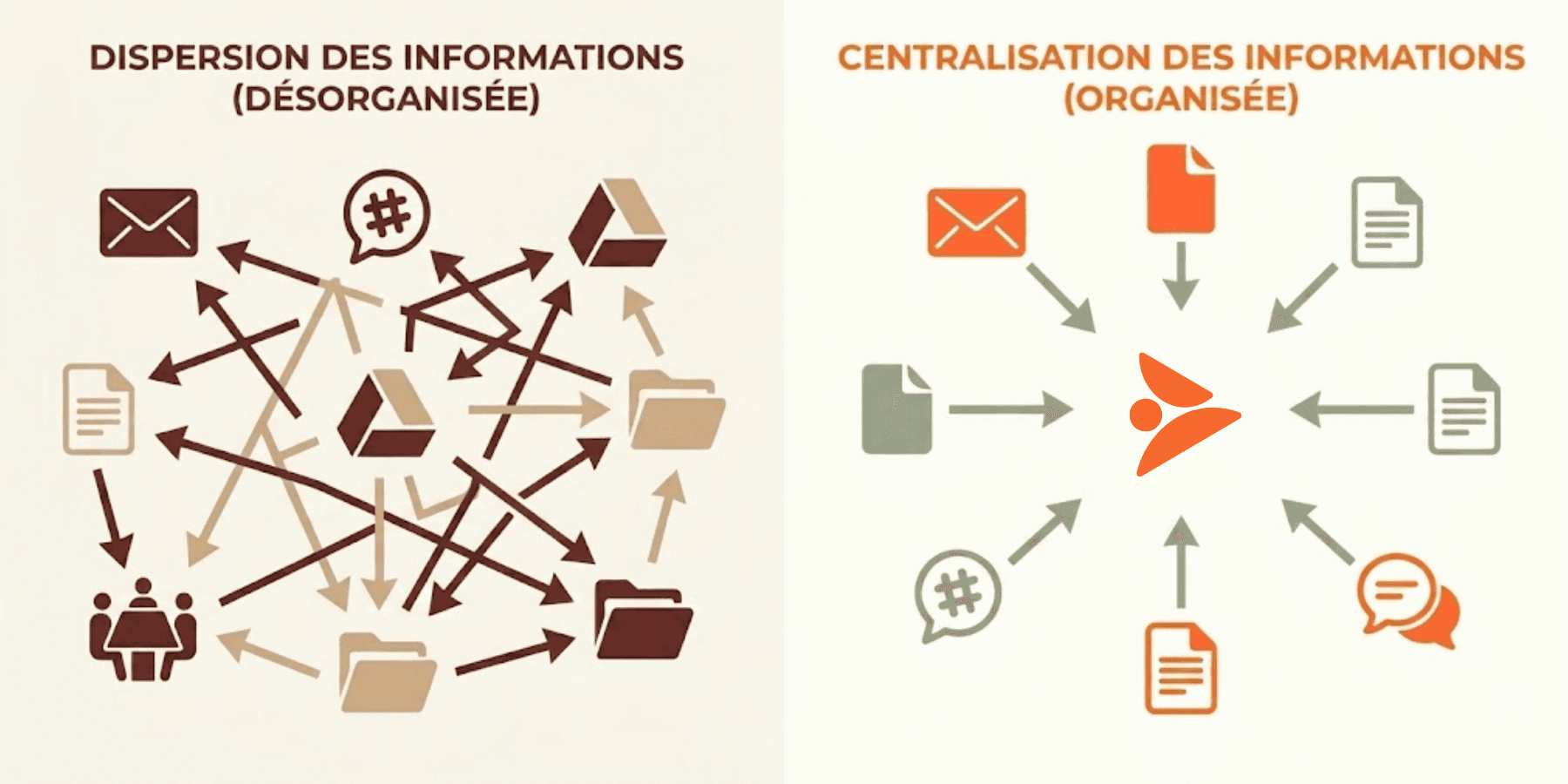
Brief in an email, assets in Google Drive, comments in Slack, history of decisions in a chat thread: when information is dispersed across several tools, the team spends precious time putting it back together before they can work.
This way of working is one of the most common obstacles to smooth production. It creates confusion, multiplies the risk of error and slows down the start of each new project.
The lack of a common repository
Without a single source of truth, each team member works with their own version of the information. Who has the latest version of the brief? Which visuals have been approved? What is the final delivery date?
These questions seem harmless, but they reveal a structural problem: the lack of a shared repository accessible to all stakeholders, at any point in the project.
Human bottlenecks
Undefined responsibilities before launch
"I thought you were taking care of that." This phrase, heard mid-project, reflects a problem that could have been avoided right from the start. When roles are not clearly defined before launch, tasks fall into blind spots or are duplicated.
Defining who does what, by when and according to which rules is a step that many teams skip due to lack of time, and which costs them much more later on.
A non-existent validation process
Producing content is great. Knowing who approves it, in what order and by what deadline, is essential. Without a defined approval workflow, content piles up waiting for feedback that does not arrive, or arrives too late to be useful.
This bottleneck is particularly costly because it occurs at the end of the production cycle: at the moment when every lost hour has a direct impact on the final deadline.
How to clear these bottlenecks before starting
Setting the framework from the start
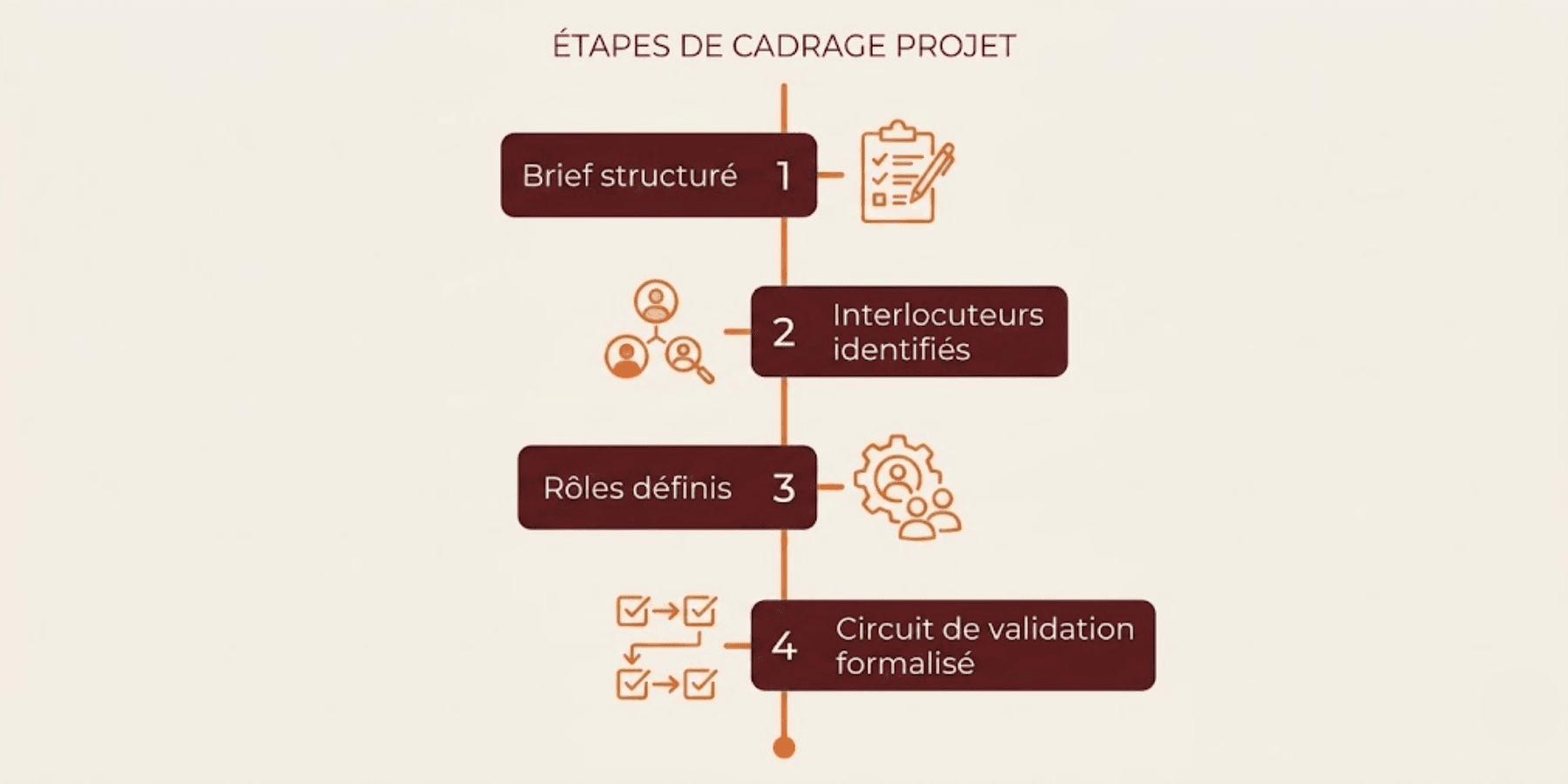
The majority of the bottlenecks mentioned have one thing in common: they could have been anticipated. Setting the framework upstream — a structured brief, identified stakeholders, defined roles and a formalised approval workflow — makes it possible to start each project on solid foundations.
This scoping work takes no longer than a well-run kick-off meeting. On the other hand, it avoids weeks of catching up and unnecessary tension during production.
Standardising to save time on each project
A framework set once can be used on all subsequent projects. Brief templates, standardised project statuses and repeatable validation workflows: these simple tools make it possible not to start from scratch with each new project.
The more process is standardised, the quicker and smoother the start. The team knows exactly what they need to do, with what information and under what rules, before production even begins.
Smartevo: structuring before producing
Centralising briefs and project information
Smartevo centralises all the information needed to launch a project in a single environment: structured briefs, shared resources and identified stakeholders from the start. Each team member knows where to find what they need, without having to search through multiple tools.
This centralisation eliminates bottlenecks linked to scattered information and allows each project to start in the best possible conditions.
Defining workflows before launch
Smartevo allows you to define and formalise validation workflows and production processes before the first piece of content is even created. Each participant knows their role, their deadlines and the steps to follow.
The bottlenecks that precede production are often the most costly, precisely because they are invisible. Anticipating, scoping and standardising before launching a project: this is the condition for production to truly start when it is supposed to.
