Industry News
Creative Operations: workflows and measuring success

Marketing and communications teams have to produce more and more content, across more and more channels and with shorter deadlines. This pressure makes organisation more complex and increases the risk of delays and hidden costs.
Creative operations make it possible to structure workflows, allocate resources more effectively and measure the performance of creative projects more accurately.
Why are creative operations becoming essential?
Creative teams have to manage more projects
Marketing and communications teams now have to produce content for social media, websites, email campaigns, videos, events and even sales materials. These creative teams must manage numerous marketing actions and several advertising campaigns in parallel.
This multiplication of formats and requests significantly increases the workload. Teams also need to improve their task management to keep track of priorities and deadlines more effectively.
Teams need to track many tasks to be completed, distribute the tasks to be carried out and coordinate several stakeholders on each project. This organisation becomes even more complex when several creative teams work together on the same creative workflow.
Creative workflows are becoming more complex
The more content there is, the harder workflows become to follow. Teams have to distribute tasks, track versions, manage approvals and coordinate several stakeholders.
Without a workflow automation tool or automated workflow solution, this organisation quickly becomes difficult to manage.
Creative automation makes it easier to structure these exchanges and streamline workflow automation (or automated workflows). Without clear organisation, projects fall behind schedule and exchanges become difficult to centralise.
This complexity has a direct impact on productivity and on the quality of the content produced. It can also slow decision-making and harm performance in a business.
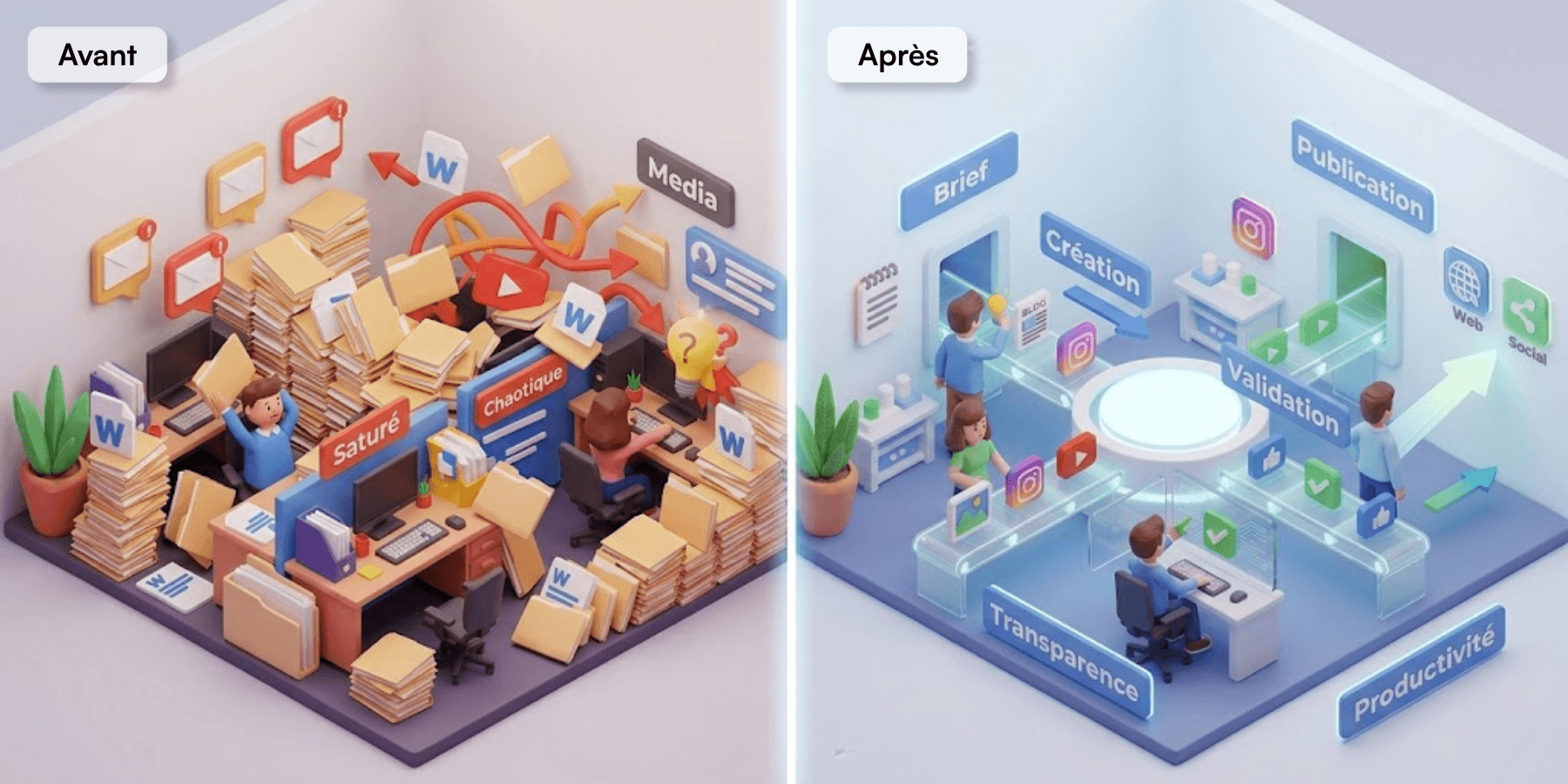
Creative operations improve collaboration
Creative operations make it easier to structure exchanges between marketing teams, creatives, freelancers, agencies and other departments.
Each stakeholder knows exactly what they need to do, when, and with what level of approval. This organisation facilitates collaboration and limits errors caused by a lack of information or contradictory feedback.
Hidden costs hinder performance
Imprecise briefs, unnecessary meetings, duplication or approvals that take too long represent significant hidden costs. These problems also have a direct impact on advertising ROI and on the marketing ROI strategy.
These problems slow teams down and make decision-making more difficult. They also create a loss of visibility over the real state of projects and priorities.
How do you put creative operations in place?
Define clear workflows
The first step is to define clear workflows for each type of project. This project management helps to structure responsibilities better and streamline project delivery.
It also helps teams to run a project more efficiently over a given period.
Teams need to know who is involved, when, on what content and with what level of approval. This organisation also helps to better structure workflows and distribute responsibilities.
This definition of project management becomes essential to avoid delays and distribute resources more effectively. It also helps companies implement their strategic objectives and business objectives.
This organisation helps reduce bottlenecks and improve the smooth running of projects.
Clarify roles and responsibilities
For creative operations to work effectively, responsibilities need to be properly divided.
Each team member must know their role, deadlines and priorities. The project manager can then better oversee the different stages and distribute tasks more effectively.
They can also better coordinate the human resources involved in each project. The project manager then has greater visibility of available resources and priorities.
This clarification avoids oversights, duplication and wasted time. It also makes it easier to distribute the workload across teams.
Centralise information and content
Creative projects often involve numerous documents, comments, approvals and versions.
Centralising all this information in one place makes it possible to save time and avoid information loss. This more structured project management also makes it easier to track approvals and content.
It can be enhanced with management tools or management software tailored to the teams' needs.
Teams therefore have greater visibility of project progress.
Which workflows should be put in place?
Structure the approval stages
Approvals are often one of the main bottlenecks in creative projects. They can slow workflows and complicate task management.
Teams need to put in place a clear approval process, with defined stages, deadlines and identified owners.
This approach helps avoid contradictory feedback and unnecessary back-and-forth.
Manage versions and feedback better
Creative content often goes through several versions before being finalised. This applies to videos as much as blog posts, visuals or presentations.
It is therefore essential to centralise comments, feedback and changes to avoid confusion.
Good version management helps teams track content evolution more effectively.
Track projects in real time
Teams need clear visibility over projects in progress.
Real-time tracking makes it possible to see which content is in production, under review or completed. Teams can therefore better manage performance and identify bottlenecks more quickly.
This real-time visibility also helps make informed decisions. It also makes decision-making easier and helps anticipate delays.
How can you measure the success of creative operations?
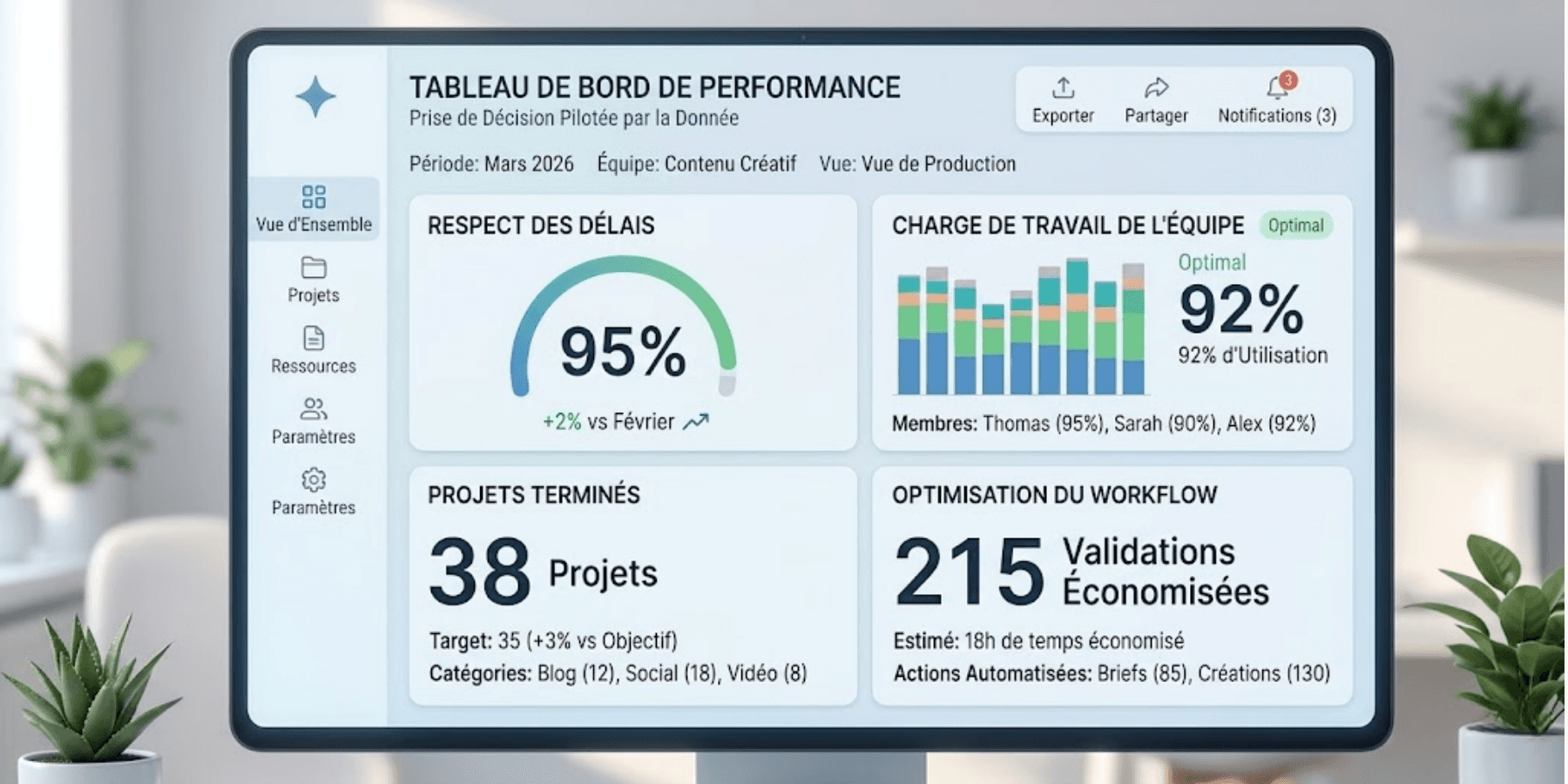
Track deadlines and productivity
Companies can measure the performance of their creative operations using several indicators. These data make it possible to check whether projects genuinely support business objectives and strategic objectives. These data make it possible to check whether projects genuinely support business objectives and strategic objectives.
This data can be grouped in a management dashboard to provide a clear view of project progress.
Companies can in particular track whether deadlines are met, the number of completed projects, time spent on each task, and the number of approvals required before publication.
These data make it possible to identify bottlenecks and areas for improvement. Teams can, for example, track key performance indicators, known as KPI (key performance indicators).
Measure team workload
Creative operations also make it easier to allocate resources more effectively.
Teams can track workloads, periods of overload or the need for additional support on certain projects. They can also analyse several marketing KPIs.
Some indicators, such as conversion rate, lead generation or number of visitors, are particularly useful for measuring the impact of marketing actions.
They also help better understand the customer journey and the content that generates the best results.
This visibility helps prevent team burnout and better organise priorities.
Identify hidden costs
Companies also need to measure the hidden costs that slow their projects down.
The number of revisions, approvals that take too long, last-minute changes or repetitive meetings can have a significant impact on overall productivity.
Tracking these elements makes it easier to manage projects and improve team efficiency. This performance measurement also helps to better evaluate marketing ROI and/or advertising ROI and a company's overall performance.
Why does Smartevo help structure creative operations?
Centralise workflows and approvals
Smartevo allows teams to centralise their briefs, content, approvals and comments in one place.
This centralisation makes it easier to track workflows and reduces information loss between the different stages of a project.
Allocate resources more effectively
Smartevo also makes it easier to track workloads and deadlines. The platform helps teams monitor their digital marketing KPIs, deadlines and performance indicators.
It also allows them to track implementations, roll-outs and action plans on each project. It therefore helps teams implement their priorities more easily.
Teams can visualise ongoing projects, distribute tasks and identify priorities more easily.
This organisation helps to manage resources better and limit delays.
Creative operations have become essential for structuring workflows, improving collaboration and measuring the performance of creative projects more effectively. By centralising information, clarifying responsibilities and tracking the right indicators, teams save time, reduce hidden costs and improve their efficiency over the long term.
