Industry News
A project's creative process

The creative approach to a project
Project approach has become essential for structuring marketing and communications initiatives. In a context where content is multiplying, mastering the project stages and putting in place an effective project management process makes it possible to align teams, optimise the resources required and guarantee success. In this article, we will explore in depth project methodology, project phases and Smartevo’s practical approach.
What is a project: definition and framework of the project approach
A project is a temporary organisation aimed at achieving clearly defined objectives, within a given timeframe and with identified resources required.
In a project approach, this definition takes on an operational dimension. It is not just about having an idea, but about structuring an execution framework.
A project requires:
A clear vision
Precise organisation
Ongoing management
According to the Project Management Institute, a project is a series of structured tasks, activities and deliverables, carefully carried out to achieve a specific objective.
Why the project approach has become strategic
The growing complexity of projects makes the project approach essential.
Today, teams have to manage:
High volumes of content
Multiple approvals
Tight deadlines
An analysis by McKinsey & Company shows that organisations that organise and formalise their project management approach significantly increase their overall productivity.
Without structure, the project requires more coordination, more time and generates more errors.
The main project stages in a complete project methodology
Preparation: structuring the project foundations
The first project phase is preparation. It involves defining the project objectives, the resources required and the constraints.
This stage of the project methodology is fundamental. Poor preparation often leads to delays and misunderstandings.
The project manager puts in place:
A project plan
Initial risk management
Organisation of project tasks
This is where the project approach takes shape.
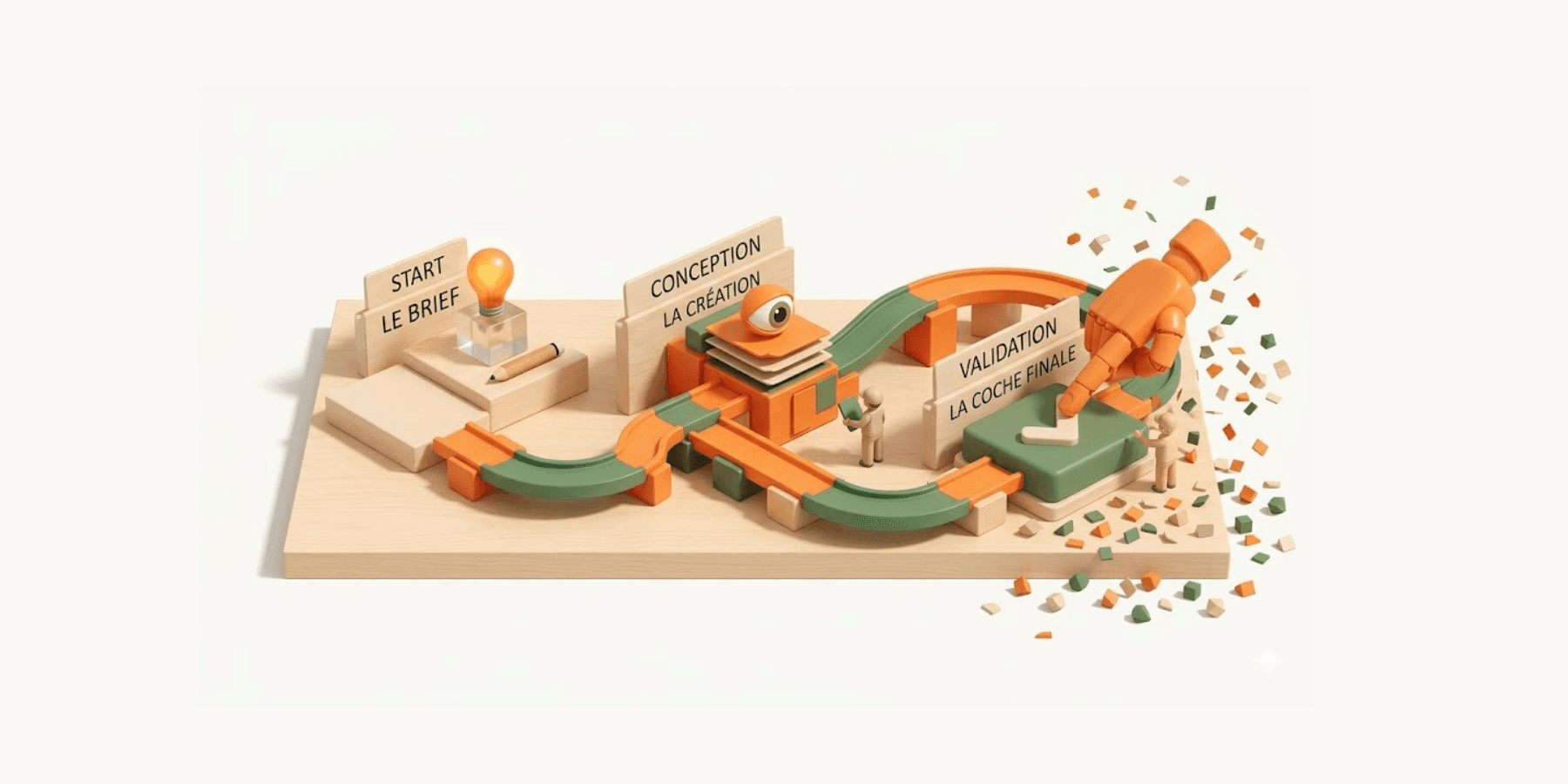
Design: building the creative approach
The design phase corresponds to structuring the creative approach.
Ideas are turned into concrete actions. Roles are clearly defined and responsibilities are allocated.
The project requires close collaboration between marketing, creative and operational teams.
Planning: organising the project phases
Planning is a key stage in the project management process.
It makes it possible to:
Structure the project tasks
Define deadlines
Prioritise actions
The Gantt chart is often used to visualise project progress.
Dashboards make real-time monitoring possible.
The project management process in depth
Implementation: executing the strategy
The implementation phase corresponds to executing the project tasks. The project manager ensures coordination and adherence to deadlines. Management tools make it possible to centralise information and improve communication flow.
Monitoring: steering project progress
Monitoring makes it possible to measure project progress. Regular updates are essential to adjust actions. Dashboards provide an overall view and facilitate decision-making.
Risk management: anticipating blockers
The risk management process involves identifying potential problems. It makes it possible to anticipate delays and adapt the strategy. Good risk management is often what distinguishes a successful project from one in difficulty.
Closure: analysing project success
The final project phase consists of analysing the results. It makes it possible to improve management methodologies and optimise future projects.
Project methodology: traditional methods vs agile methods
Traditional methods
Traditional methods rely on rigid planning. Each stage is defined in advance. This management method is suited to stable projects.
Agile methods
The agile methods prioritise flexibility. They make it possible to adapt the project approach according to changes. They are particularly well suited to creative projects.
The role of the project manager in project management
The project manager is the cornerstone of the project approach.
Define the project objectives
Organise the project tasks
Track project progress
Manage the required resources
They ensure the overall consistency of the project management process.
The limits of traditional management tools
Traditional tools have several limitations:
Lack of structure
Dispersed information
Manual updates
Result: the project management process becomes inefficient.
The Smartevo approach: reinventing the project approach
A project methodology integrated into the tool
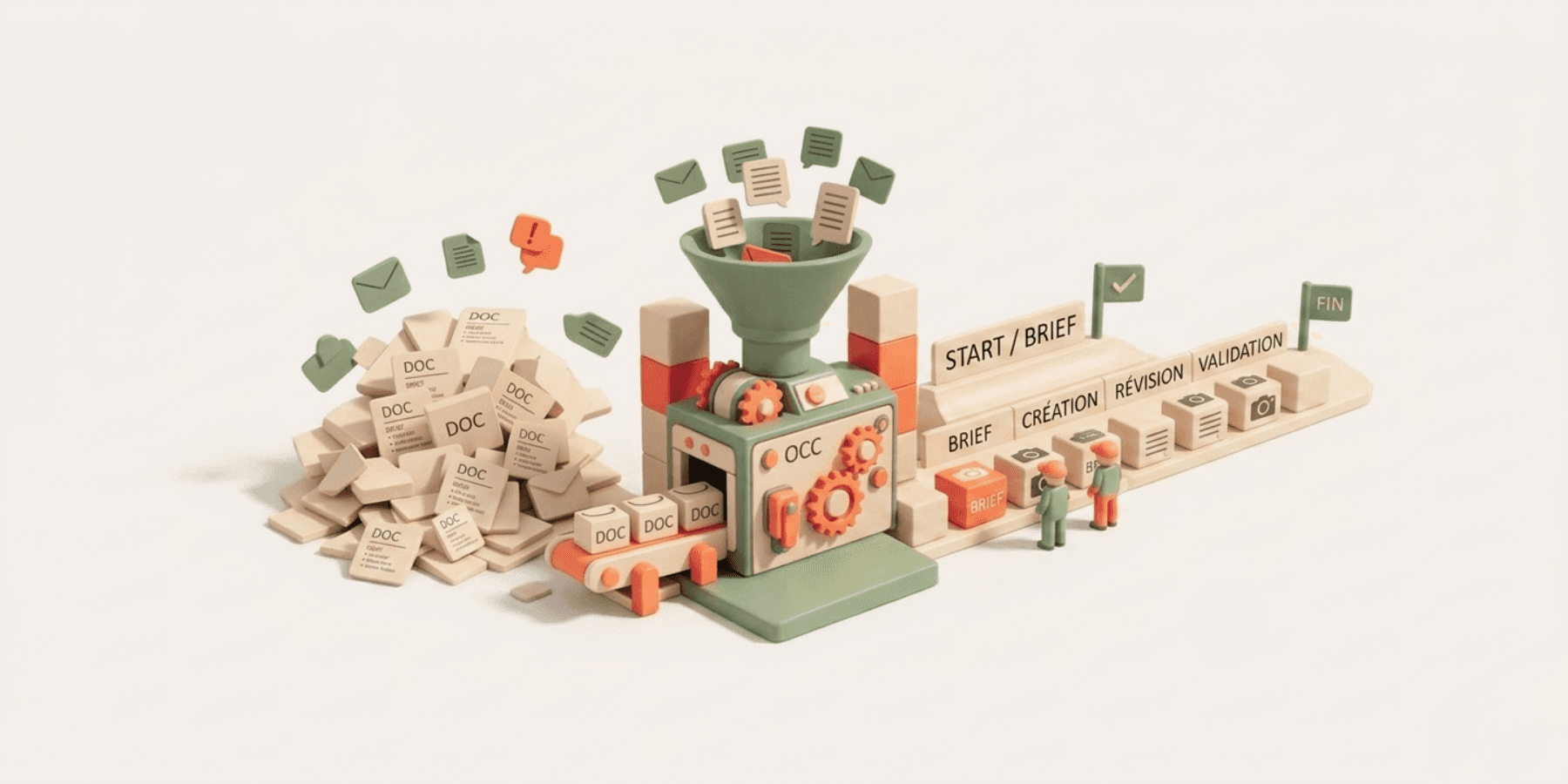
Smartevo is not just a tool, it is an integrated project methodology.
Unlike traditional solutions, the project approach is structured directly within the platform.
Teams can:
Create a structured project plan
Define project objectives clearly
Organise project stages
Everything is designed to simplify implementation.
Real-time management of the project management process
Smartevo enables real-time tracking of project progress. Dashboards provide an instant overall view. Updates are automatic, which reduces errors.
Smartevo centralises all the management tools:
Planning
Approval
Communication
Monitoring
No need to multiply tools.
Advanced structuring of the creative approach
Smartevo is designed for the creative approach.
The platform makes it possible to manage:
Briefs
Feedback
Approvals
Versions
This considerably improves the quality of content.
A measurable improvement in performance
With Smartevo, teams notice:
Better adherence to deadlines
Reduced back-and-forth
Improved productivity
The project approach becomes a performance driver.
Best practices for optimising the project approach
Structure it from the outset
Defining clearly defined project objectives helps guide the project approach and align teams. Precise objectives make monitoring and the project management process easier. They must be simple, measurable and understood by everyone. The project manager ensures consistency.
Putting a project methodology in place helps structure the project phases and project tasks. It facilitates organisation and real-time monitoring. Management tools and dashboards improve visibility. This helps optimise the resources required and meet deadlines.
Monitor continuously
Using dashboards makes it possible to centralise key information and steer the project approach. They offer a clear view of project objectives and performance. This makes the project management process and decision-making easier.
Tracking project progress in real time makes it possible to quickly adjust actions. This visibility improves coordination and the project management process. The project manager can react faster. This helps with meeting deadlines.
Anticipate risks
Putting risk management in place makes it possible to anticipate problems and secure the project approach. It helps identify bottlenecks and limit impacts. This improves the project management process and decision-making.
Adapting the strategy makes it possible to respond to unforeseen events and optimise actions. This flexibility strengthens the project methodology and the teams’ effectiveness. The project manager adjusts priorities according to project progress. This contributes to success.
Why the project approach is a competitive advantage
Structuring the project approach makes it possible to:
Improve performance
Better manage the required resources
Ensure deadlines are met
It is a genuine strategic lever.
Project approach, project phases and the project management process are essential for effectively structuring initiatives. By adopting a clear project methodology and relying on Smartevo, teams can improve their organisation, optimise their creative approach and guarantee long-term project success.
