Industry News
Creative brief: definition, example and method

Creative brief: definition, example and method
The creative brief is the starting point of every communications project. It helps to structure ideas, align teams and set a clear framework from the outset. Without a brief, projects quickly become confusing, feedback piles up and deadlines stretch out. In this article, discover how to create an effective brief, the necessary information to include and a simple brief example to use.
Creative brief: definition and strategic role
The creative brief is a document that brings together all the necessary information for carrying out a project.
This brief definition is simple: it is used to frame the project and align the teams from the outset. It becomes the point of reference for the project manager and all stakeholders.
As the marketing experts at HubSpot explain, the brief helps to structure ideas and guide the creative team.
A good brief helps to save time, avoid mistakes and improve the quality of deliverables. It is essential in any communications project.
Why create a structured creative brief
Creating a brief to set a clear framework
Creating a brief makes it possible to turn an idea into a concrete action plan. It structures the project objectives and defines expectations.
A good creating a brief helps avoid a great many back-and-forth exchanges. Everyone knows what they need to do.
It becomes a genuine management tool for the project manager.
The client brief as a starting point
The client brief is often the starting point. It is written on the client side.
It lays the foundations of the project: objectives, constraints and expectations. It is then used by a communications agency or an in-house team.
The clearer the brief, the more effective the results.
The key elements of an effective creative brief
The necessary information in a client brief
A client brief must contain all the necessary information to launch the project.
The context helps to understand the situation. The project objectives provide a clear direction.
The target audience is essential. It makes it possible to adapt the message.
The key messages define what you want to convey. The brand image and visual identity must be respected.
The brand guidelines can also be specified to guide the creative work.
Finally, the deliverables, schedule and budget frame the production.
Structuring a communication agency brief example
In a communication agency brief example, clarity is essential.
The agency must quickly understand the expectations in order to offer a suitable response.
A vague brief produces ineffective results. A structured brief makes it easier to take into account the issues at stake and produce relevant content.

Creative brief example (standard structure)
Simple creative brief example
Here is a creative brief example that you can adapt:
1. Context
Overview of the project and the market.
2. Project objectives
Awareness, acquisition, engagement or conversion.
3. Target audience
Profile, needs and expectations.
4. Key messages
What you want to get across.
5. Brand image and visual identity
Respect for the brand guidelines.
6. Deliverables
Expected content (video, visuals, social media...).
7. Schedule
Important dates.
8. Budget
Financial framework.
👉 To structure your briefs and your projects in a single tool, discover Smartevo
How to create a creative brief step by step
Writing an effective brief
The writing of a brief must be simple and clear. It is not about writing a lot, but about writing usefully.
A good creative brief gets straight to the point and makes it possible to quickly understand the project.
Create a brief by starting with the objectives
To create a brief, start by defining the objectives.
They must be precise and measurable. For example: launch an advertising campaign, improve visibility on social media or strengthen the brand image.
Defining the target audience
The target audience must be clearly identified.
It makes it possible to adapt the content and messages. A good brief takes into account users’ expectations and needs.
Structuring the messages and deliverables
The key messages must be simple and understandable.
The deliverables must be clearly defined: visuals, videos, content for social media, etc.
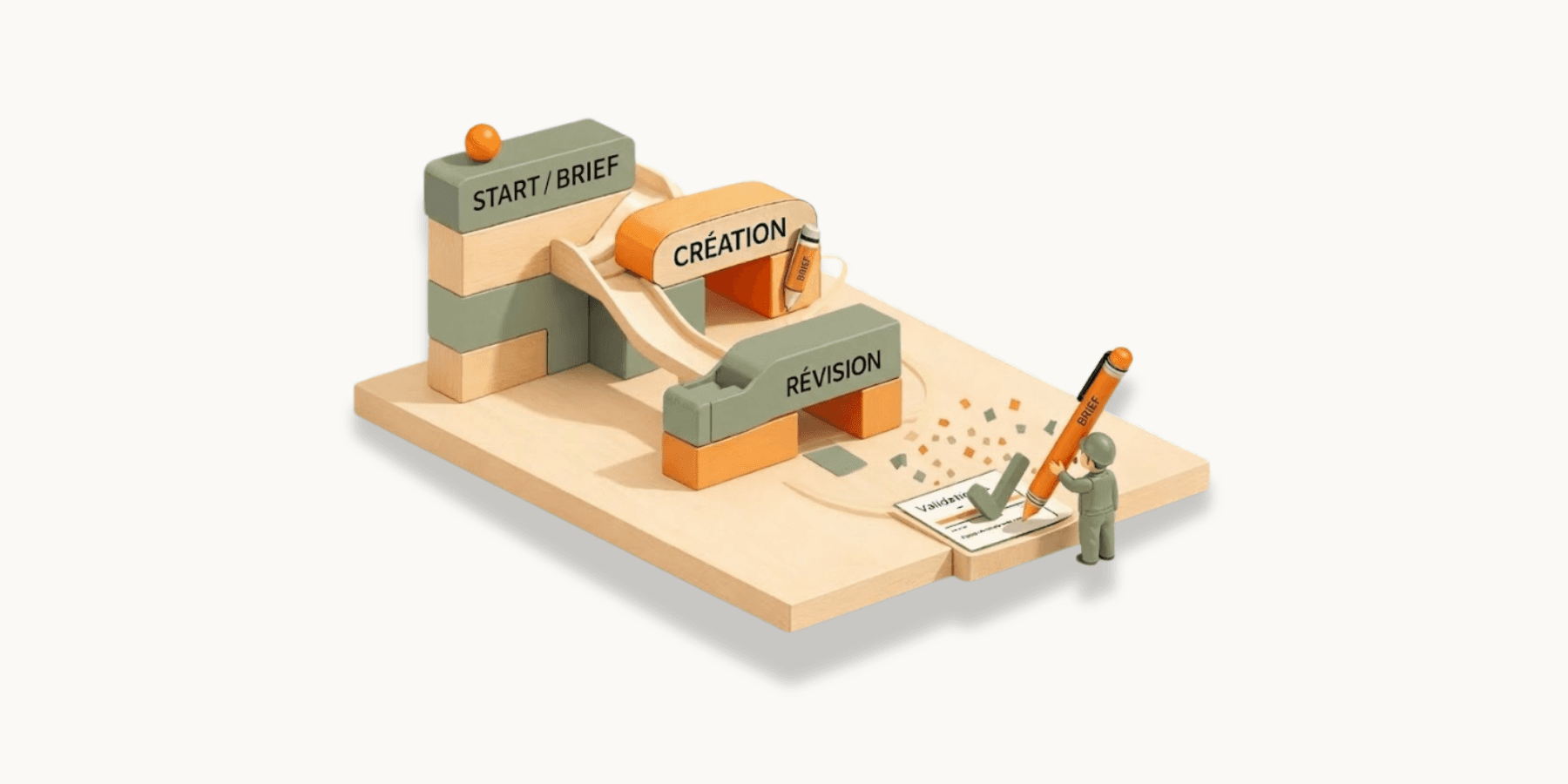
Mistakes to avoid in a creative brief
A creative brief can become ineffective if it is poorly constructed.
A lack of information prevents the creative team from working properly.
A brief that is too complex slows the project down. Conversely, a brief that is too vague creates misunderstandings.
Lack of structure is also a problem. A brief should resemble a simple and readable specification document.
A good brief helps to save time and improve the quality of deliverables.
The creative brief in a modern communications project
In a communications project, the brief plays a central role.
It helps to coordinate teams, structure exchanges and track progress.
Today, projects often involve several channels: social media, digital campaigns, video content.
The creative brief helps to maintain overall consistency.
Optimising creative brief management with the right tools
Tools make it easier to manage the creative brief.
They centralise information and facilitate collaboration between the project manager and the teams.
They also make it possible to track approvals and avoid information loss.
A good tool makes it possible to turn a brief into a truly operational specification document.
👉 To centralise your briefs, approvals and creative projects, discover Smartevo
The creative brief is an essential element for structuring a communications project, aligning teams and improving the quality of content. By taking the time to create a clear and complete brief, you save time, make the creative team’s work easier and maximise your chances of success.
