Industry News
Content annotation and validation: the practical guide

Annotating and approving content are two steps that many teams confuse or rush through. Yet, poorly managed, they are the source of most unnecessary rewrites and production delays. Structuring these two steps is one of the most effective levers for smoothing the creative production line.
Annotation and approval: two distinct steps
What content annotation is
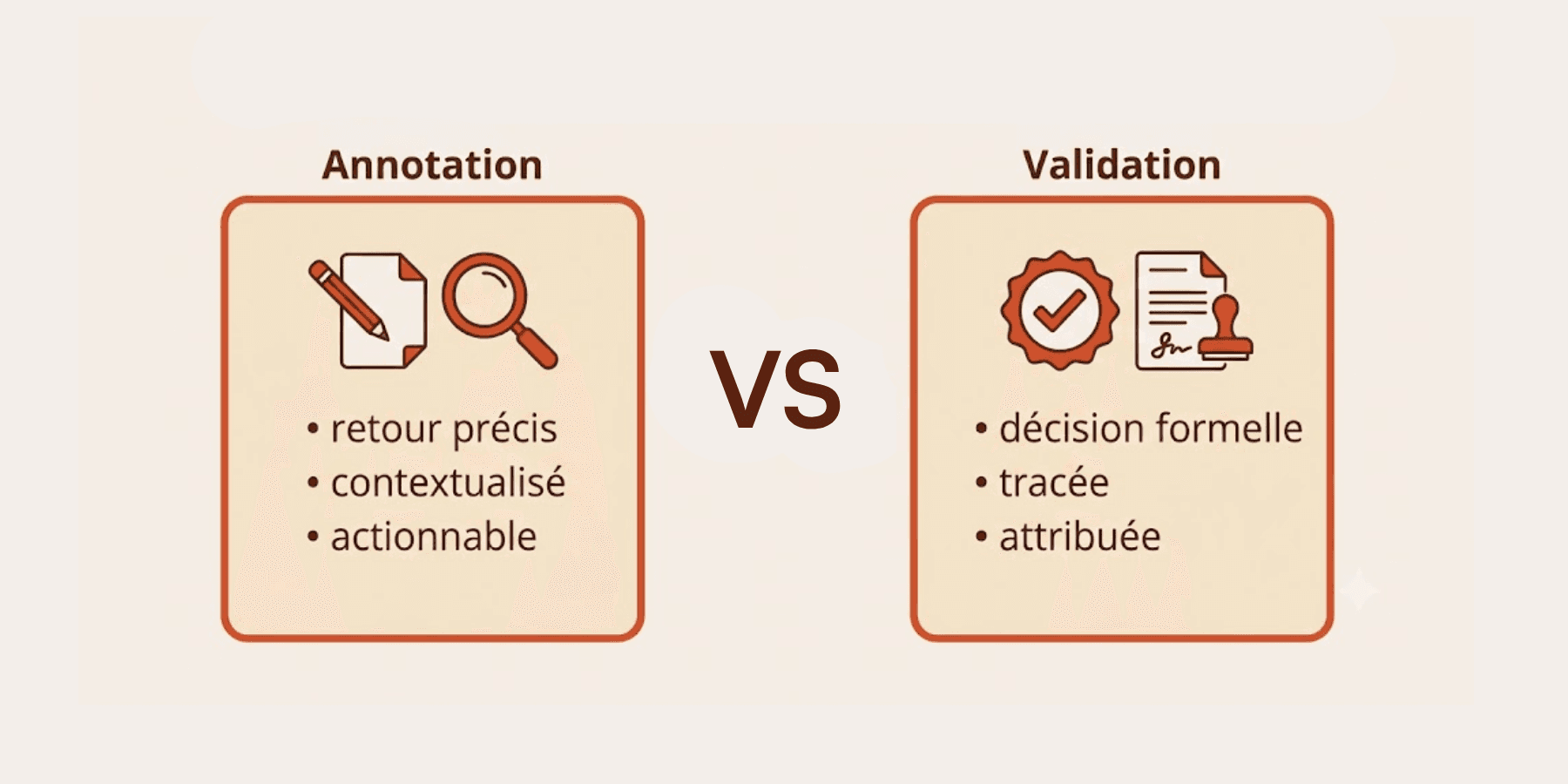
Annotating content consists of formulating precise and contextualised feedback on a version in production. Annotation takes place before approval: it allows the creative team to understand what needs to be changed, why and how, before submitting a final version for approval.
Good annotation is specific and actionable. It does not just indicate that an element is problematic: it specifies the nature of the problem and points towards a concrete correction. It is this level of precision that allows the creative team to produce a corrected version that meets expectations without having to ask for further clarification.
What content approval is
Approval is a formal decision: the content is approved and can move to the next step or be published. It occurs after annotations have been addressed and corrections integrated. Approving content means confirming that it meets the expectations defined in the brief and is ready for distribution.
Approval commits the responsibility of the approver. This is why it is essential that the role of the approver is clearly assigned beforehand and that each approval is tracked: who approved what, on what date and on which version.
Why these steps are often poorly managed
Informal and non-centralised feedback
In many teams, annotations arrive through informal channels: a comment during a meeting, a message in instant messaging, a handwritten note on a printed document. This feedback is neither centralised nor formalised, and the creative team must gather it before they can process it.
This informality generates lost information, contradictions between the feedback of different interlocutors and partial corrections that force several review cycles to start over. A single, structured channel for annotations is the first condition for an effective feedback process.
Ill-defined approver roles
Who approves what in your team? If the answer is not immediate and shared by everyone, it is because the roles of the approvers are not sufficiently defined. In many organisations, approval is a vague process: several people think they have a say in the final content without their respective roles being clearly defined.
This ambiguity generates late feedback, cascading approvals and last-minute corrections. Defining in advance who approves, in what order and with what level of authority is essential to secure production deadlines.
Best practices for annotating effectively
Contextualise each annotation
An effective annotation is not limited to pointing out a problem: it explains why this element is problematic and in what context. "This title is not punchy enough" is a vague annotation. "This title does not highlight the main benefit for our target, who is looking above all to save time" is an actionable annotation.
This contextualisation allows the creative team to understand the intention behind the correction and to propose an adapted solution rather than mechanically applying a modification without understanding its logic.
Distinguish between mandatory corrections and suggestions
Not all annotations have the same status. Some are essential corrections that condition the approval of the content. Others are suggestions for improvement that the creative team can integrate or not according to their judgment. Not distinguishing between these two levels creates confusion and unnecessary back-and-forth.
Clearly indicating for each annotation whether it is a mandatory correction or a suggestion allows the creative team to prioritize their work and quickly approve non-negotiable points before focusing on optional adjustments.
Best practices for approving effectively
Define approval criteria in advance
Content can only be approved effectively if the approval criteria have been defined before production. What makes this content meet expectations? What are the non-negotiable elements: tone, key messages, legal constraints, graphic guidelines?
These criteria must appear in the brief and be known to all participants before starting production. An approver who discovers their criteria at the time of review takes more time and formulates less relevant feedback than an approver who knows exactly what they are looking for from the start.
Respect feedback deadlines
Content waiting for approval is content blocked. Each day of delay in sending feedback is a day lost on the final deadline. Yet, feedback deadlines are rarely formalised: we send the content to the approver and we wait without knowing when the response will arrive.
Defining a maximum feedback deadline for each approval step is a simple practice that secures the entire schedule. It makes approvers accountable and allows the creative team to anticipate the next steps without waiting in uncertainty.
Smartevo: annotate and approve in a single environment
Annotations directly on content
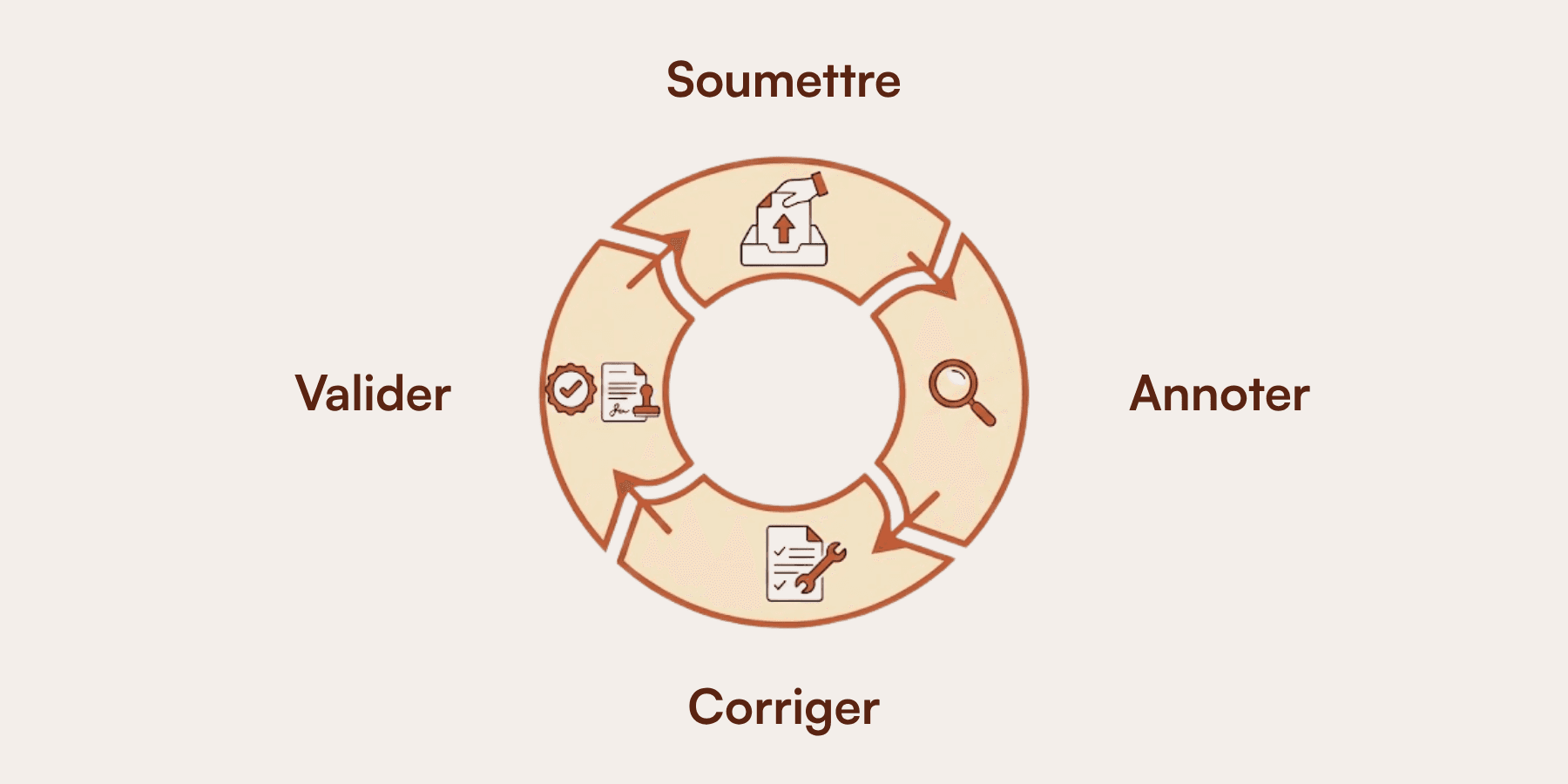
Smartevo allows annotating directly on the content in production: visuals, texts, documents. Each annotation is contextualised, timestamped, and assigned to its author, which eliminates ambiguity and facilitates the processing of corrections by the creative team.
This centralised approach ensures that all feedback is visible in one place, in the right context, without the creative team having to gather it from multiple scattered sources.
A structured and traceable approval workflow
Smartevo formalises approval workflows: who approves what, in what order and by what deadline. Each approval is tracked, and the progress of the workflow is visible in real-time to all participants. Bottlenecks are immediately identifiable and reminders are automated to avoid delays associated with forgotten approvals.
Annotating and approving are two steps all too often rushed for lack of appropriate processes. Centralising, contextualising, and formalising these two steps: this is what allows a creative team to produce content that meets expectations, on time, and without unnecessary exhaustion.
