Industry News
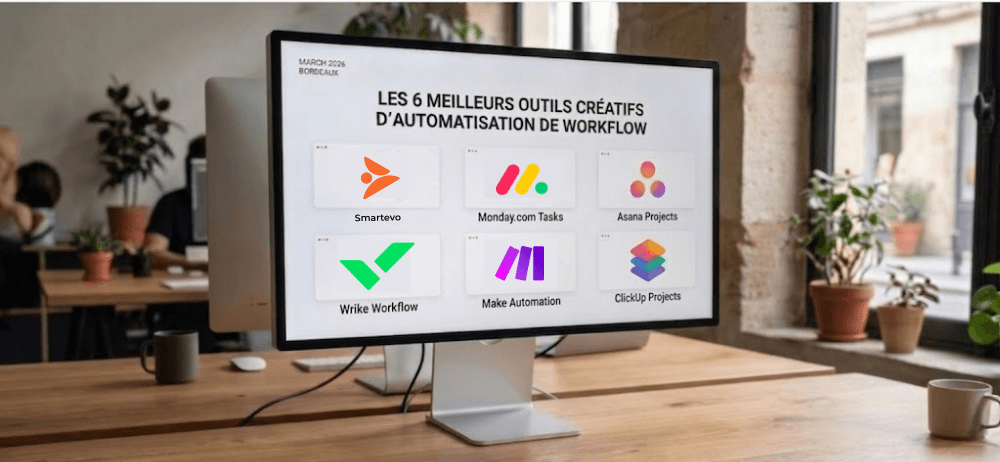
The 6 best creative workflow automation tools
The 6 best creative workflow automation tools
Marketing content production is accelerating in companies. Videos, visuals, articles and social posts involve many stakeholders and make workflows more complex. Process automation and workflow automation help structure these workflows and automate repetitive tasks in order to save time.
Process automation: definition
Process automation means using technologies to carry out certain tasks automatically, with less human intervention.
A piece of software can, for example, automate task creation, the updating of a status or sending notifications.
According to IBM, process automation refers to the use of digital tools to replace certain manual operations with automated workflows.
This approach helps save time, improve team organisation and make business process management easier.
Business process automation and business process management
Business process automation covers all internal activities within a company.
It helps improve business process management in several areas:
marketing
human resources
finance
customer service
project management
For example, an organisation can automate data entry, task management or report creation.
Process automation helps improve operational efficiency and speed up decision-making.
Workflow automation and digital transformation in companies
Workflow automation is now a central element of organisations' digital transformation.
Companies are looking to structure their processes in order to become more efficient and improve collaboration between teams.
Automation solutions make it possible in particular to:
automate certain repetitive operations
improve business process management
increase visibility over projects
facilitate decision-making
According to a study by McKinsey & Company, automation can improve organisations' productivity by 20 to 30%.
The benefits of process automation
Process automation offers several benefits for companies.
Saving time
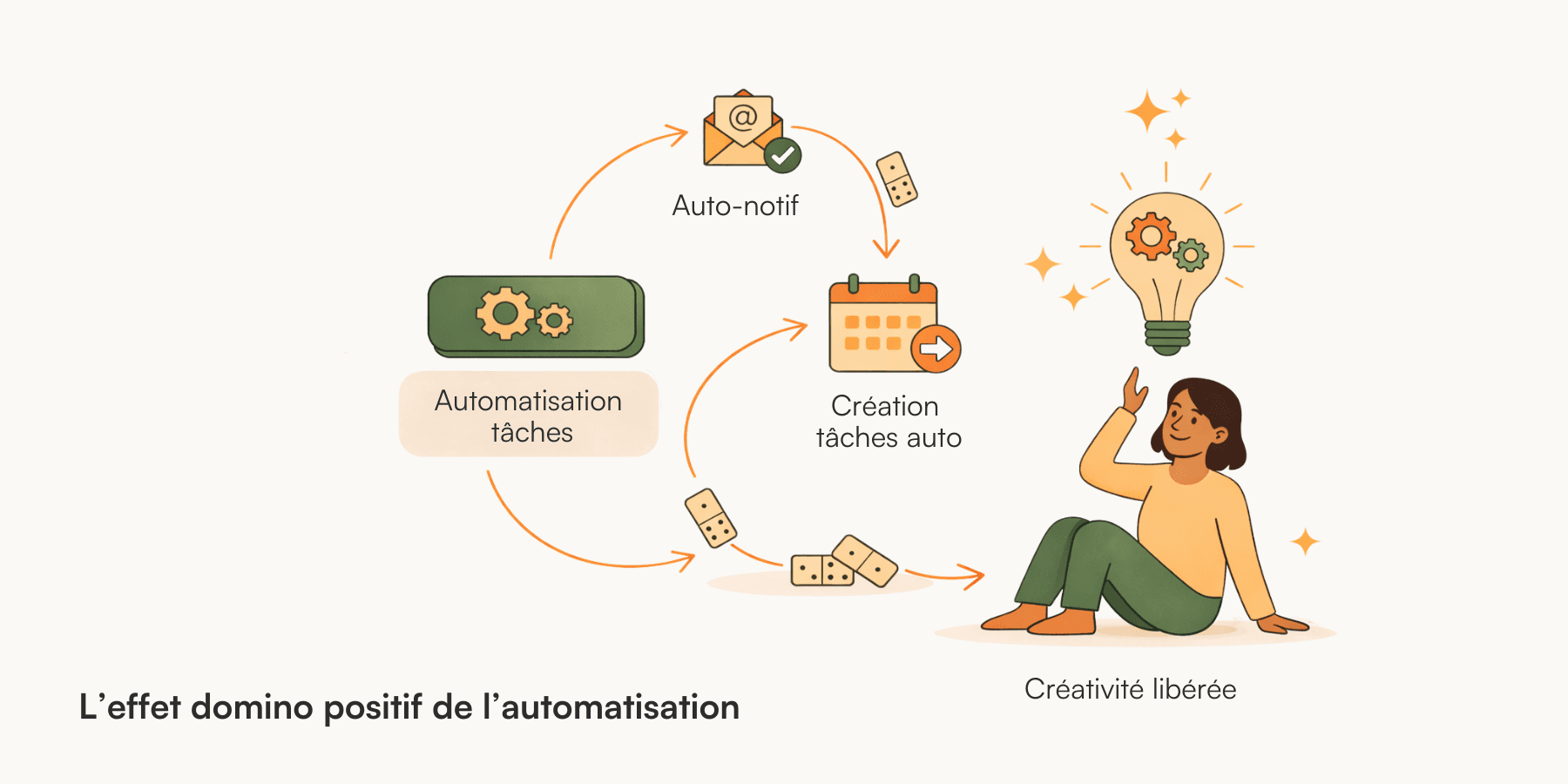
Automation tools make it possible to automate repetitive tasks such as sending notifications or creating tasks.
Teams thus save valuable time in project management.
Improving productivity
When certain operations are automated, employees can focus on higher-value tasks.
This organisation makes it possible to improve productivity within teams.
Reducing costs
One of the main benefits of automation is the reduction in costs linked to manual tasks.
By automating certain operations, companies can limit errors and reduce operating costs.
Improving decision-making
Process automation tools often provide dashboards.
These indicators make it possible to track projects and improve decision-making.
How to set up workflow automation
The implementation of a workflow automation strategy is generally carried out in several stages.
Identify repetitive tasks
The first step is to identify the activities that take time.
This may include:
data entry
sending notifications
creating tasks
updating statuses
Structure the processes
It is then necessary to put in place clear workflows in order to improve business process management.
Each step must be defined to make the implementation of automation easier.
Choose a suitable solution
Companies can then select a process automation software capable of automating the processes identified.
These tools make it possible to reduce human intervention in certain operations.
The 6 best creative process automation tools
1. Smartevo
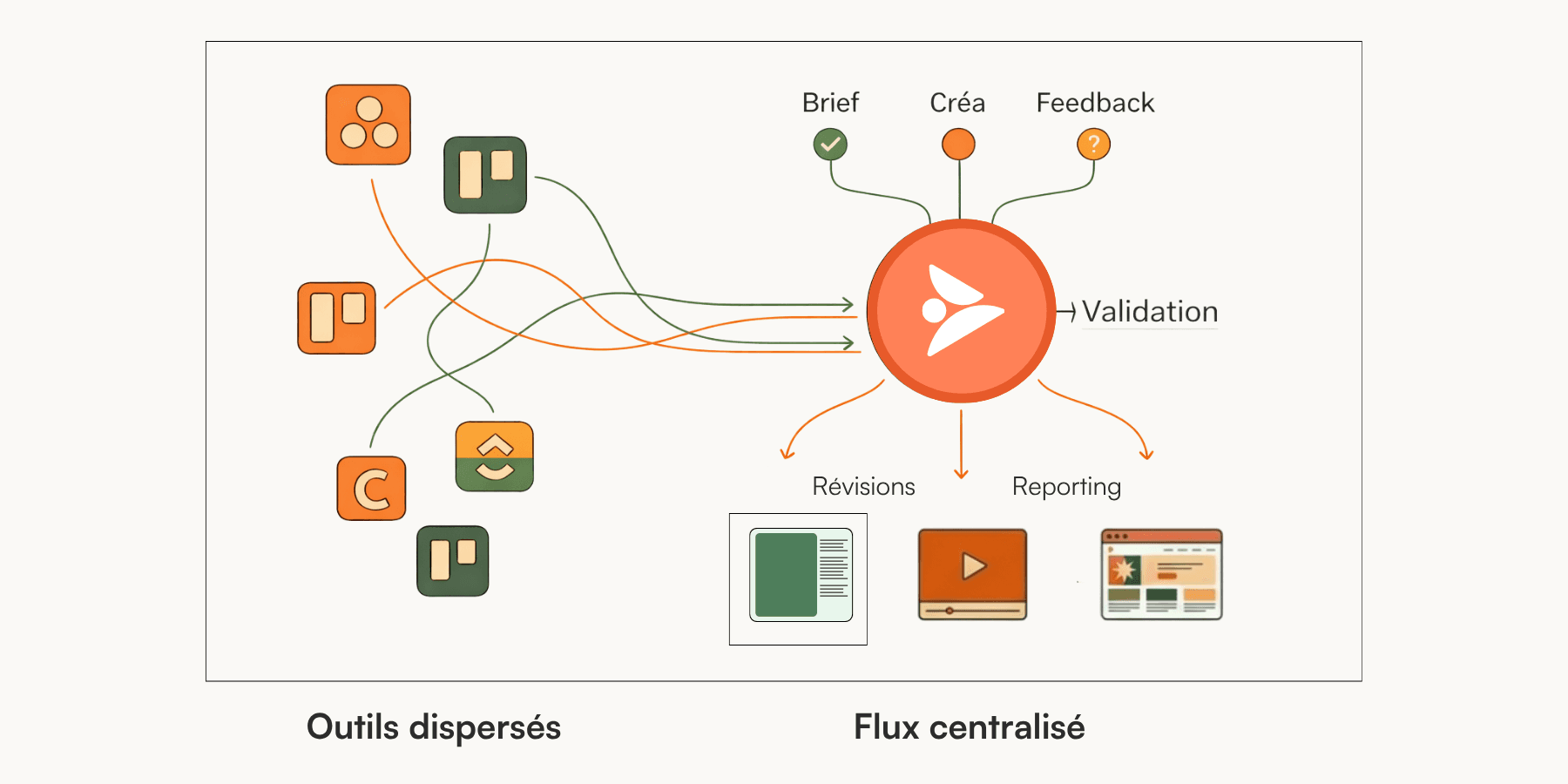
The Smartevo platform helps organise marketing projects and improve process automation.
It makes it possible to centralise briefs, approvals and documents in a single environment.
The platform automates repetitive tasks such as notifications, assignments or project duplication.
It also offers dashboards that make decision-making easier and improve business process management.
2. Monday.com
Monday.com is a project management tool. It offers several process automation features to organise projects.
However, Monday.com remains a general-purpose tool that was not designed to meet the needs of marketing and communications teams. These steps of creative business process management must be configured manually. As a result, approval workflows can lack structure.
3. Asana
Asana is a management tool. It offers several workflow automation features to organise projects.
However, Asana remains primarily focused on task management. Some steps of creative business process management, such as content approvals or visual feedback, are limited. Marketing teams often have to use other tools to complete these workflows.
4. Wrike
Wrike is a project management platform. It offers several workflow automation features to organise projects.
Wrike can be complex to set up for some teams. Creative business process management often requires advanced configuration. As a result, setting up workflows can take time.
5. Make
Make is an integration and automation platform. It enables different tools to be connected in order to automate data flows.
However, Make is not designed for creative business process management. The tool is mainly used to connect applications together. Marketing teams therefore have to use other platforms to structure their content production workflows.
6. ClickUp
ClickUp is a project management tool that offers several workflow automation features to organise projects.
However, the platform offers a very large number of features. This richness can make the tool harder to get to grips with for some teams. Dashboards and workflows can become complex to configure and maintain.
Why is Smartevo particularly suited to marketing teams?
Unlike some general-purpose tools, Smartevo is designed to structure the entire content production cycle.
The platform facilitates business process management and marketing process automation.
It makes it possible in particular to:
structure briefs
organise approvals
automate notifications
track projects in dashboards
These features make it possible to automate repetitive tasks, improve organisation and generate a real time saving.
Companies can thus benefit from greater cost reduction and improve the management of their campaigns.
FAQ: process automation
What is process automation?
Process automation involves using digital tools to automate certain operations and reduce human intervention.
Why automate processes in a company?
Business process automation helps save time, improve productivity and reduce errors.
What are the benefits of automation?
The benefits of automation include better organisation, cost reduction and improved project management.
How do you set up workflow automation?
The implementation of workflow automation begins by identifying repetitive tasks.
Companies can then put in place automated workflows using a workflow automation solution or a management tool such as Smartevo.
Process automation and workflow automation have become essential levers for companies committed to their digital transformation. By automating certain tasks and structuring business process management, organisations can improve productivity, save time and strengthen collaboration between teams
