Industry News
Creative automation: accelerating marketing production

Creative automation: speeding up marketing production
Marketing teams are now producing more and more content: videos, visuals, blog articles, email campaigns, social media posts. This multiplication of formats creates more approvals, versions and exchanges. Creative automation makes it possible to structure these creative workflows in order to produce faster, without losing quality.
What is creative automation
An approach for automating repetitive tasks
Creative automation refers to the set of tools and methods that make it possible to automate repetitive tasks related to content creation.
This may involve creating visual variants, automatically updating formats, assigning tasks, sending approval reminders or sharing files.
The aim is not to replace creative teams, but to save them time on the most repetitive tasks. This approach also helps companies better structure their project management and use better management tools.
Why creative automation is becoming essential
Marketing teams have to produce more content than they did a few years ago. Between social media, sponsored campaigns, video formats, newsletters and the different markets to be addressed, demands are increasing rapidly.
Without clear organisation, teams then spend a lot of time on administrative tasks: follow-ups, copy and paste, file searches or approval tracking.
These tasks have a direct impact on the marketing department, on internal teams and on the quality of customer service.
A response to the hidden costs of marketing projects
Overly long approvals, incomplete briefs, multiple versions or scattered exchanges represent significant hidden costs.
These problems slow down marketing production, occupy teams with low-value tasks and increase the risk of errors.
Creative automation helps reduce these frictions by streamlining the different stages of the project. It also makes decision-making easier and improves performance tracking over time.
What are the benefits of creative automation
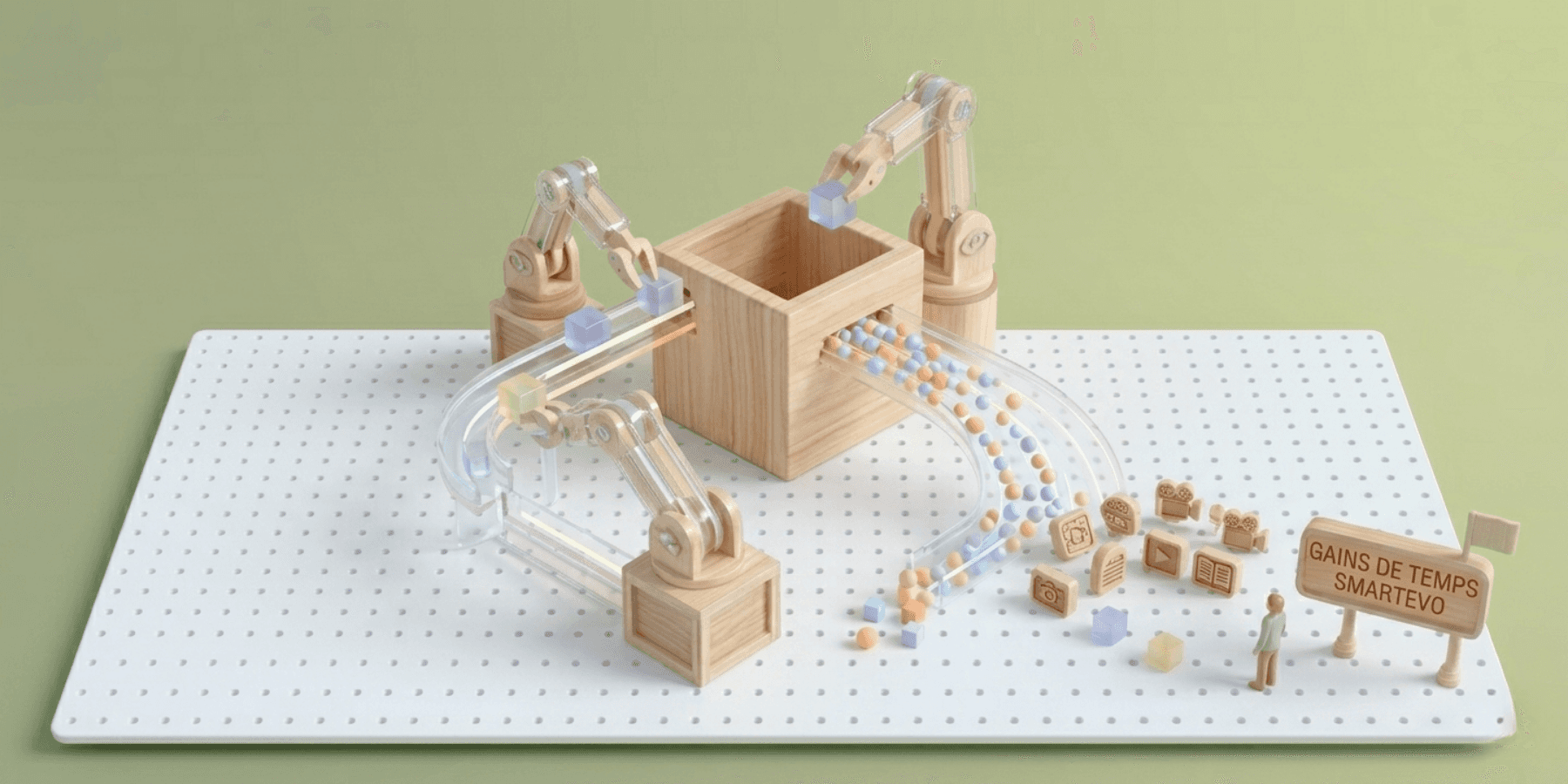
Saving time on production
One of the main advantages of creative automation is the time saved.
Some tasks that used to take several hours can be automated in a few minutes: format duplication, sending notifications, assigning tasks or generating content variations.
Teams can therefore focus more on strategy, creativity and high-value campaigns. This also makes it easier to put a better marketing strategy in place.
Reducing errors and improving consistency
When processes are manual, it becomes easier to forget an approval, use the wrong version or publish content that does not comply with the brand guidelines.
Creative automation makes it possible to standardise certain stages and secure workflows. This intelligent automation reduces the risk of errors, makes updates easier and improves consistency across each type of content.
Producing more content without increasing team size
Content needs are growing faster than available resources. Creative automation allows teams to manage more projects without necessarily hiring more people.
It also makes it easier to personalise content according to audiences, languages or distribution channels.
How to automate a creative workflow
Structuring briefs from the outset
An effective workflow always starts with a clear brief. Teams need to centralise the essential information: objectives, expected formats, deadlines, target audience, budget and project owners.
This stage avoids unnecessary back and forth and limits incomplete requests that slow down production.
It also helps put better project management in place from the launch of a new product or service. This more structured setup limits errors from the outset.
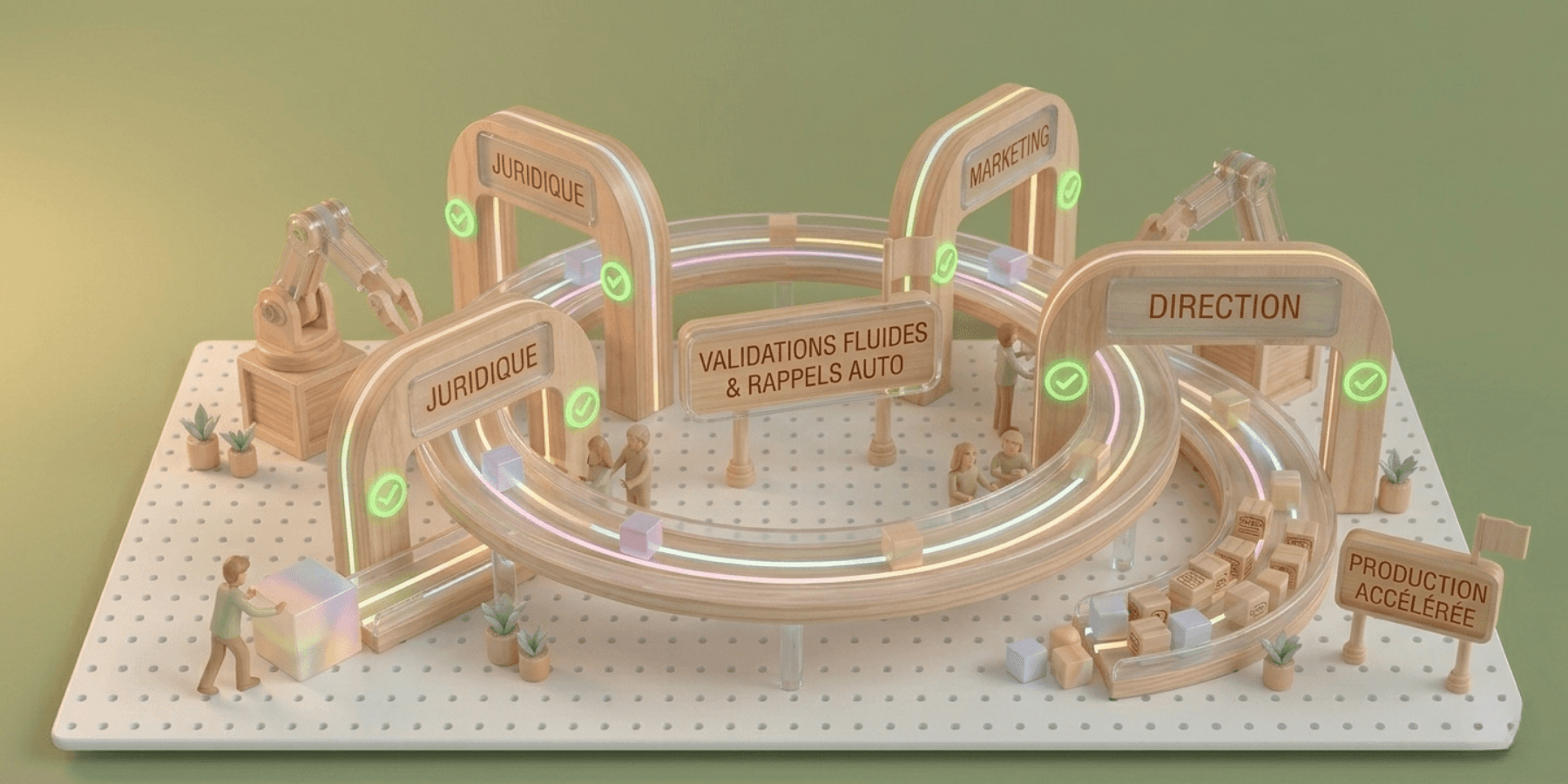
Automating approvals and follow-ups
Approvals are often one of the main causes of delay in marketing projects. When feedback arrives by email, instant messaging or meeting, it becomes difficult to know which version is the right one or who still needs to approve it.
Automation makes it possible to send reminders, define approval stages and track statuses in real time.
Some companies go further with AI automation to prioritise tasks and better distribute the workload.
Centralising content and feedback
To avoid wasting time, teams need to be able to find files, comments and different versions easily.
A creative automation tool makes it possible to centralise content in a single space, with a clear history of feedback and approvals. This reduces errors, simplifies collaboration and improves visibility on ongoing projects.
Why Smartevo helps automate creative workflows
A platform designed for marketing teams
Smartevo helps marketing and communications teams structure their projects from brief to publication.
The platform centralises requests, content, comments, approvals, schedules and tasks in a single space. Teams therefore gain visibility and reduce time lost in scattered exchanges.
Automations adapted to creative projects
Smartevo makes it possible to automate several stages: task assignment, notifications, follow-ups, project templates, schedules or approval workflows.
Teams can also standardise certain briefs, create reusable templates and simplify project tracking.
This organisation helps reduce hidden costs while speeding up production. It also simplifies the implementation of projects and campaigns.
It also helps teams more easily implement their digital marketing and content marketing campaigns.
Better visibility on performance
Beyond production, Smartevo also helps teams track their projects more effectively. Managers can identify delays, bottlenecks, workload or the stages that take the most time.
This visibility makes decision-making easier and helps improve processes over time.
Creative automation is becoming an essential lever for marketing teams that want to produce faster, reduce errors and improve their organisation. Companies that automate their workflows save time, limit hidden costs and can devote more energy to creating high-value content over time.
